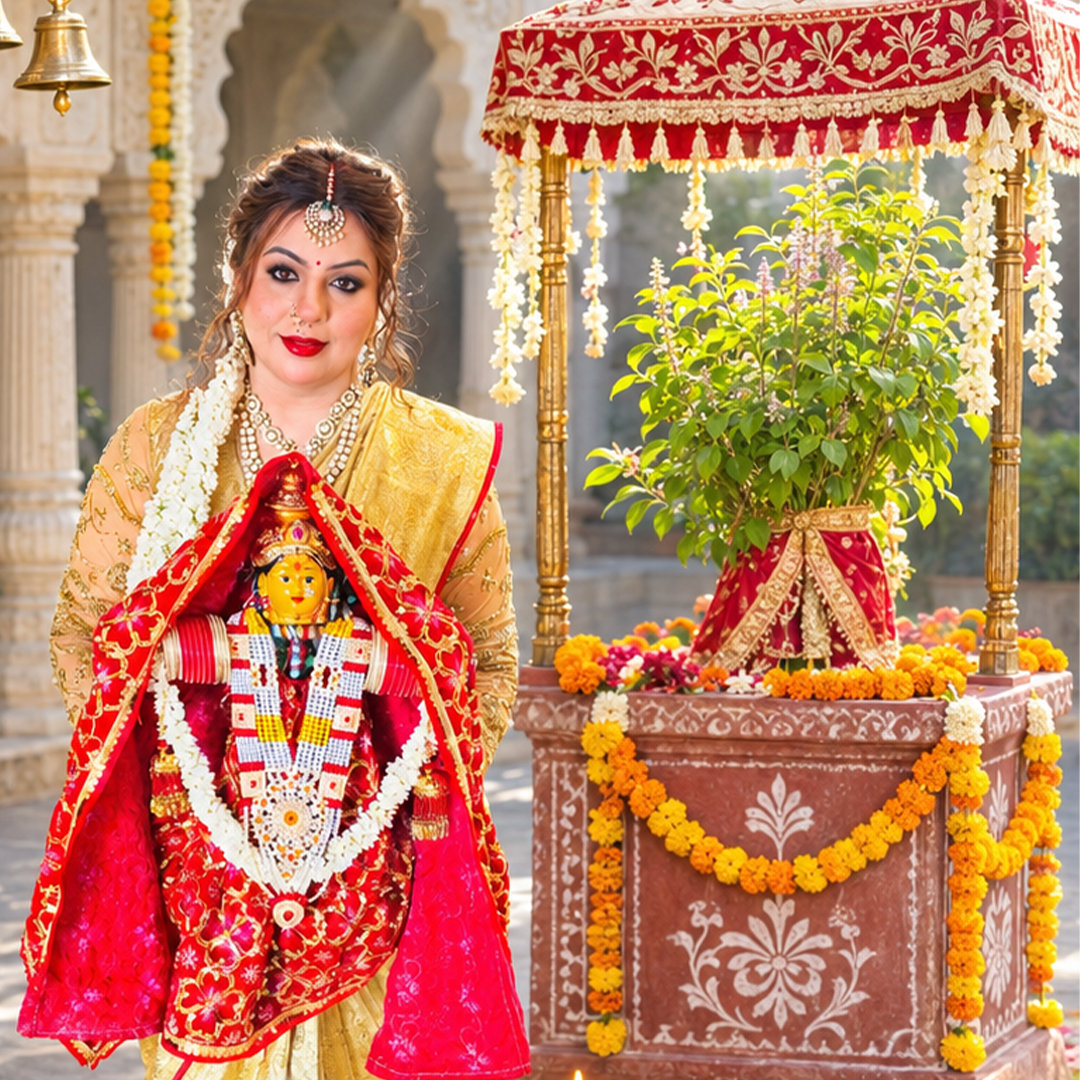
The Tulsi plant that stands in our courtyard is not just a plant. It carries the story of a devotee's pain, a god's humility and a promise that is still being kept. With Tulsi Vivah here, I want to share the true story behind it.
Who was Vrinda?
Tulsi was once Vrinda, a devoted follower of Lord Vishnu since childhood. She was married to the asura Jalandhar, born of Lord Shiva's energy in the ocean, so powerful that even the gods could not stand before him. But his real strength was his wife. Vrinda's devotion and penance acted as a shield around him, and as long as it held, he could not be defeated.
Deceit and a curse
As Jalandhar's terror grew, the gods sought refuge in Vishnu. Vishnu then took Jalandhar's form and appeared before Vrinda. She believed her husband had returned, and her vow was broken. In that very moment, Jalandhar fell in battle. When Vrinda learned the truth, her heart broke. The deity she had worshipped for lifetimes had deceived her. In her pain, she cursed Vishnu to become stone. Vishnu accepted a devotee's curse with a bowed head and became the Shaligram. Vrinda gave up her life, and from that spot rose the Tulsi plant.
Vishnu's promise
Vishnu then granted Vrinda a boon. She would remain forever dear to him as Tulsi, he would accept no offering without her, and in his Shaligram form he would marry her every year in the month of Kartik. Vrinda had not lost her purity; she had earned it. This is why a Tulsi leaf is placed in every offering made to Vishnu and Laddu Gopal even today.
When and how
For the four months of Chaturmas, Vishnu rests in yoga-nidra. He awakens on Dev Uthani Ekadashi, and Tulsi Vivah follows the next day. This year, Dwadashi runs from 6:31 AM on 21 November to 4:56 AM on 22 November. Some families observe it on Ekadashi itself, so follow your own family tradition. The ritual is simple: dress the Tulsi pot as a bride, place a Shaligram or an image of Vishnu beside it as the groom, perform puja, sing wedding songs, take the pheras and offer aarti and bhog. Families without a daughter may perform the kanyadaan of Tulsi. From this day, the auspicious season for weddings is considered open.
The lesson
The greatest lesson of this story is that devotion has no room for ego. Though he was a god, Vishnu accepted his devotee's curse. And Vrinda did not turn her pain into bitterness; she became a form that purifies every home today. This Tulsi Vivah, do not only perform the ritual. Let the story settle in your heart too.
Radhe Radhe.
Dr. Narayani Garg, Psychic Spiritual Mentor | transformation with NNG